
Rss Feeds (1161)
Mid-Michigan Bonsai Message Corner
The next MMBC Meeting is May 21st, 2026 at the Foster Community Center, Room 109, at 6:30pm (gathering time) - 8:30pm.

- Category: Rss Feeds
- Created: 29 August 2025
- Written by:
In early 2018 I got a call from the then-curator of the Portland Japanese Garden, Sadafumi Uchiyama, who asked for help sourcing bonsai. I coughed up some phlegm—getting over bronchitis following my tiny house build—and said, “Yes, I’d like that”—cough—“thank you.”
- Category: Rss Feeds
- Created: 29 August 2025
- Written by:
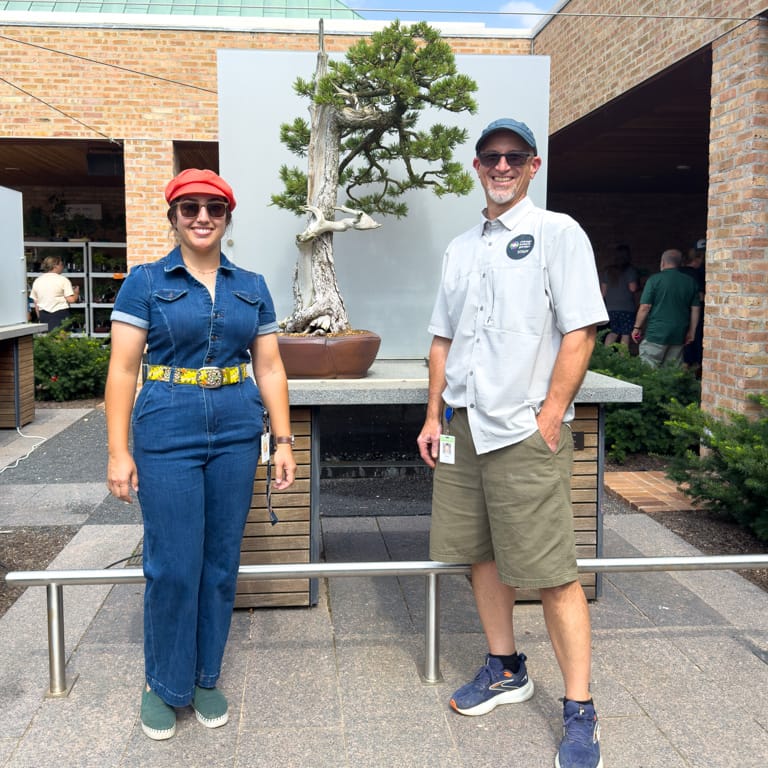
While I was in town for the recent Mid-America Bonsai Exhibit, I had the opportunity to visit and learn about the bonsai collection at the Chicago Botanic Garden. Curator Chris Baker and Seasonal Bonsai Assistant Angelica Ramirez led me through a tour of the facility that included the work areas, multiple greenhouses for overwintering trees at different temperatures, and the public display courtyards.

- Category: Rss Feeds
- Created: 22 August 2025
- Written by:
The shape of pine needles gives us clues to our pine care.

- Category: Rss Feeds
- Created: 19 August 2025
- Written by:
A big thank you to everyone who has registered for a Weekend Pass at the upcoming 9th US National Bonsai Exhibition on September 13-14 2025 in Rochester, New York

- Category: Rss Feeds
- Created: 18 August 2025
- Written by:
This past weekend I had the pleasure of serving as the featured guest at the 47th Annual Mid-America Bonsai Exhibit hosted by the Midwest Bonsai Society. It was a fantastic weekend thanks to the hard work of the organizers and volunteers that made the event possible.

- Category: Rss Feeds
- Created: 15 August 2025
- Written by:
A few years back I acquired two Harland Boxwoods from a friend and have greatly enjoyed having them around. This week one of them got up on the workbench.

- Category: Rss Feeds
- Created: 11 August 2025
- Written by:
After studying, growing, training and teaching bonsai for 63 years I have accumulated too many bonsai. Many of the trees have grown large and are too heavy for me to move. Watering and coming in contact with each tree is enjoyable. However, it requires many hours and thousands of gallons of water to maintain such a collection of fine bonsai.

- Category: Rss Feeds
- Created: 11 August 2025
- Written by:
Natural bonsai styling isn’t about neglect or randomness. It’s about observing how trees grow in the wild—how they bend with the wind, stretch toward the light, and adapt to their environment. This style celebrates the tree’s individuality rather than imposing a rigid ideal.

- Category: Rss Feeds
- Created: 08 August 2025
- Written by:
Pitcher Plant and Pearly Everlasting at the Portland Japanese Garden
- Category: Rss Feeds
- Created: 02 August 2025
- Written by:
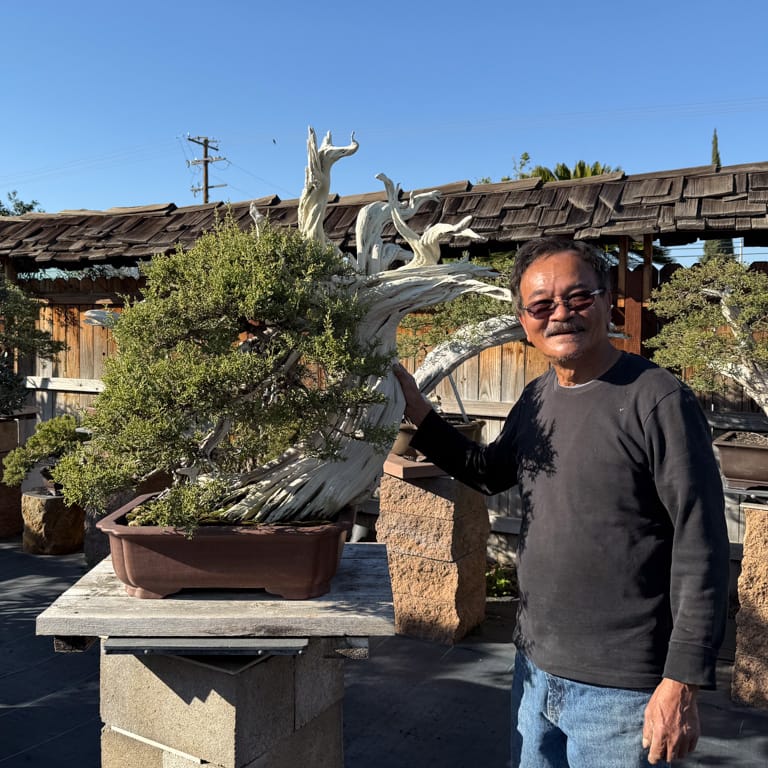
Getting to know David Nguy over the years has been a pleasure. The first time we had a chance to talk at length was on a trip to Japan about eight years ago. He invited me to his garden that day, and I’d been looking forward to seeing it ever since.