
Last week we took a look at this leggy Black Pine.
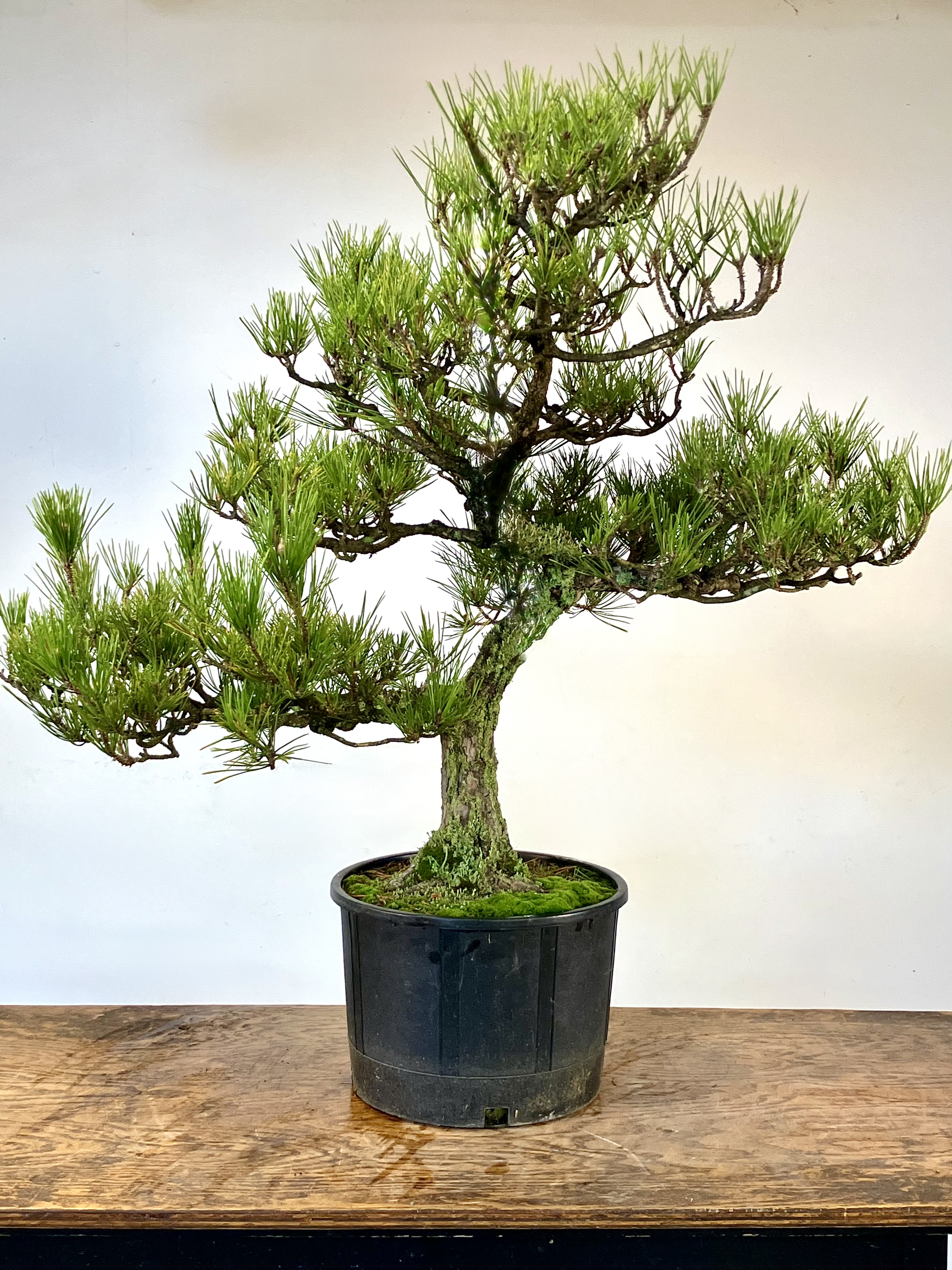
The pine reminded me of a crane. Taking off with its long neck stretched out.
It won’t be a good bonsai with such wings. So they need to be tucked in. And that neck is overlong.
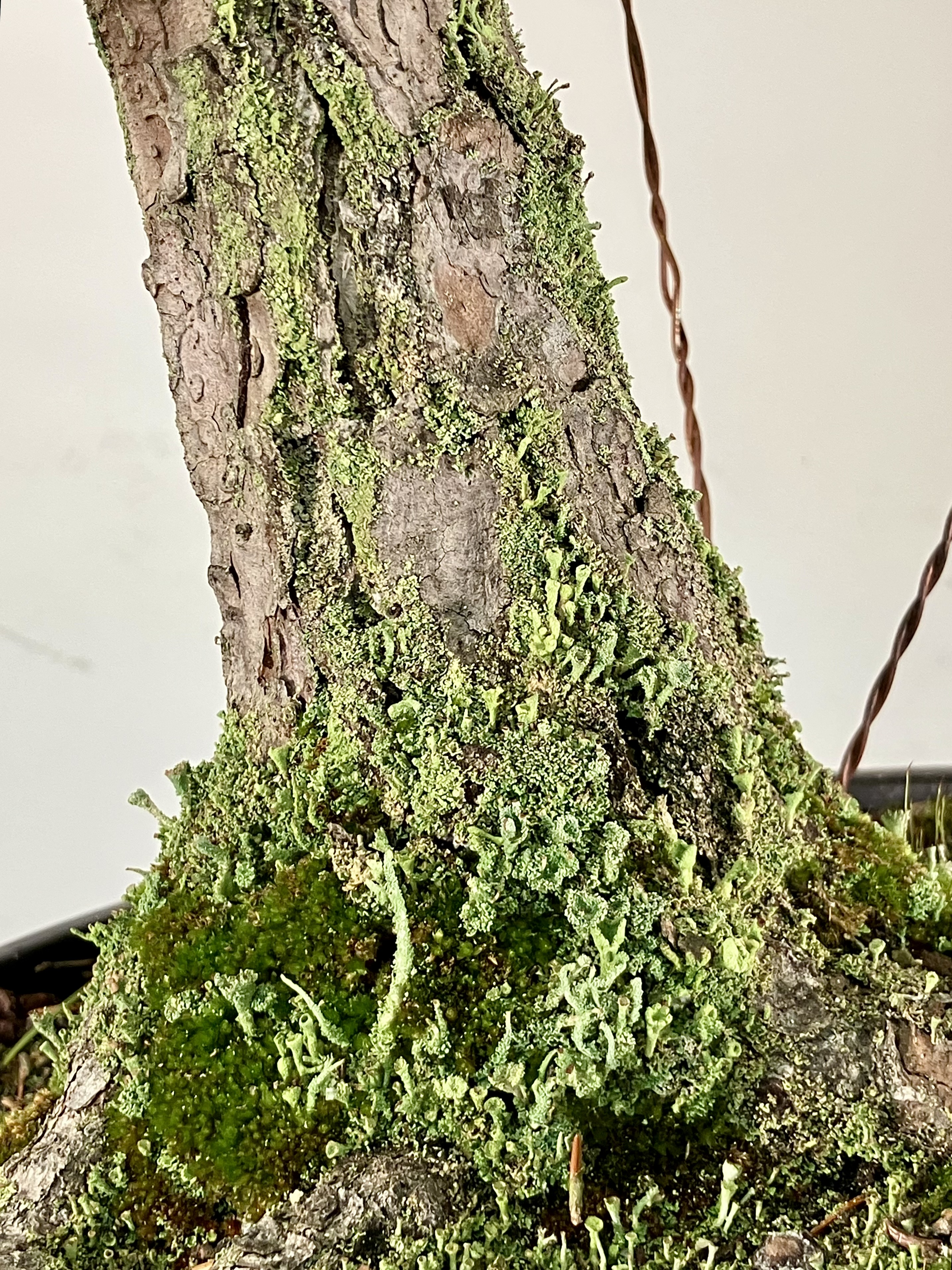
Nice bark on this one. Maybe 35 years old. The edges of the bark plates are set off by lichen filigrees. (Lichen doesn’t hold onto much moisture, and where it attaches to bark I’ve yet to see bark rot. It might happen, I’ve just not seen it.)
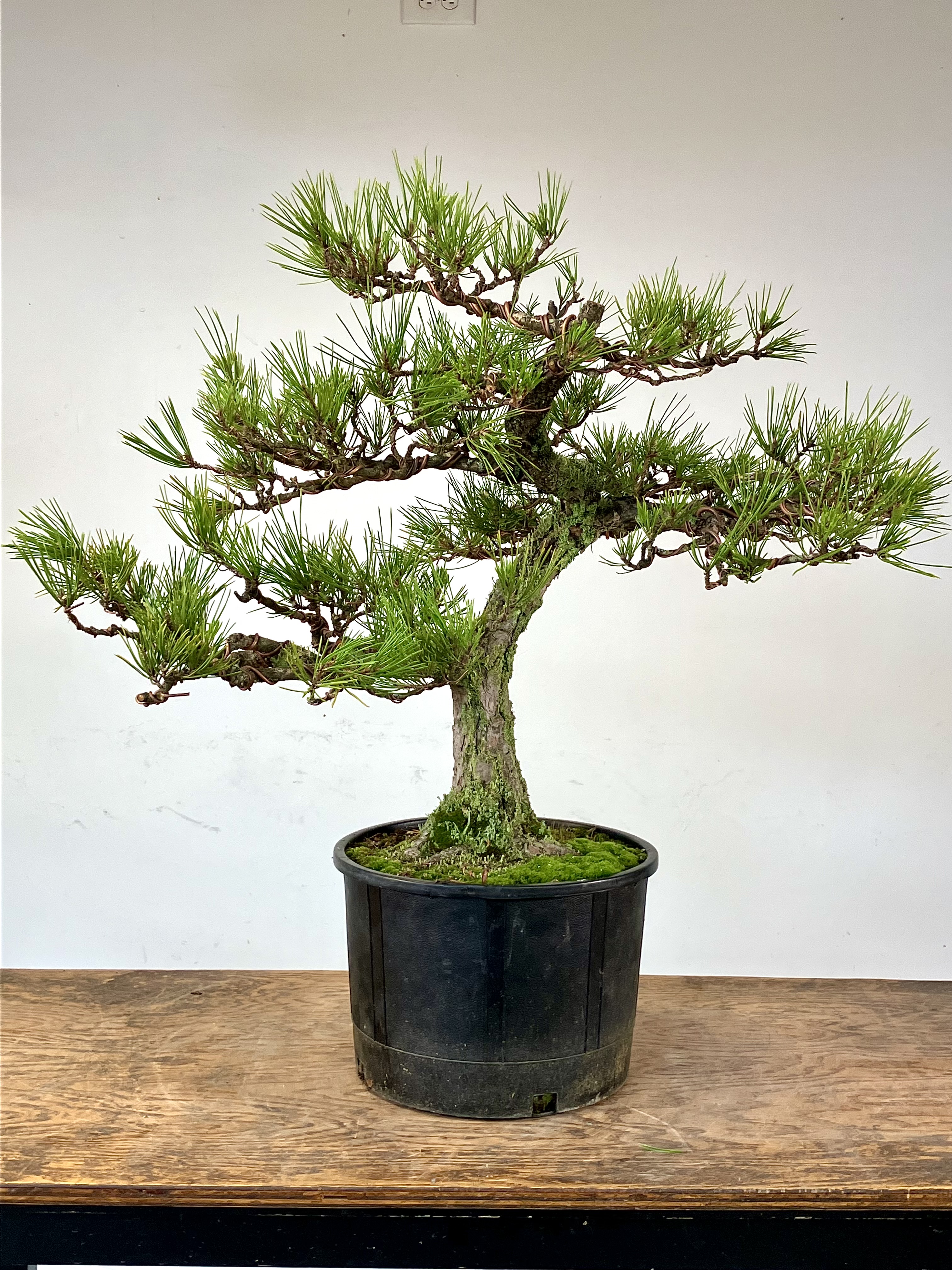
After low branches were shortened and the top cut to a new leader. The tree has been wired but not set.
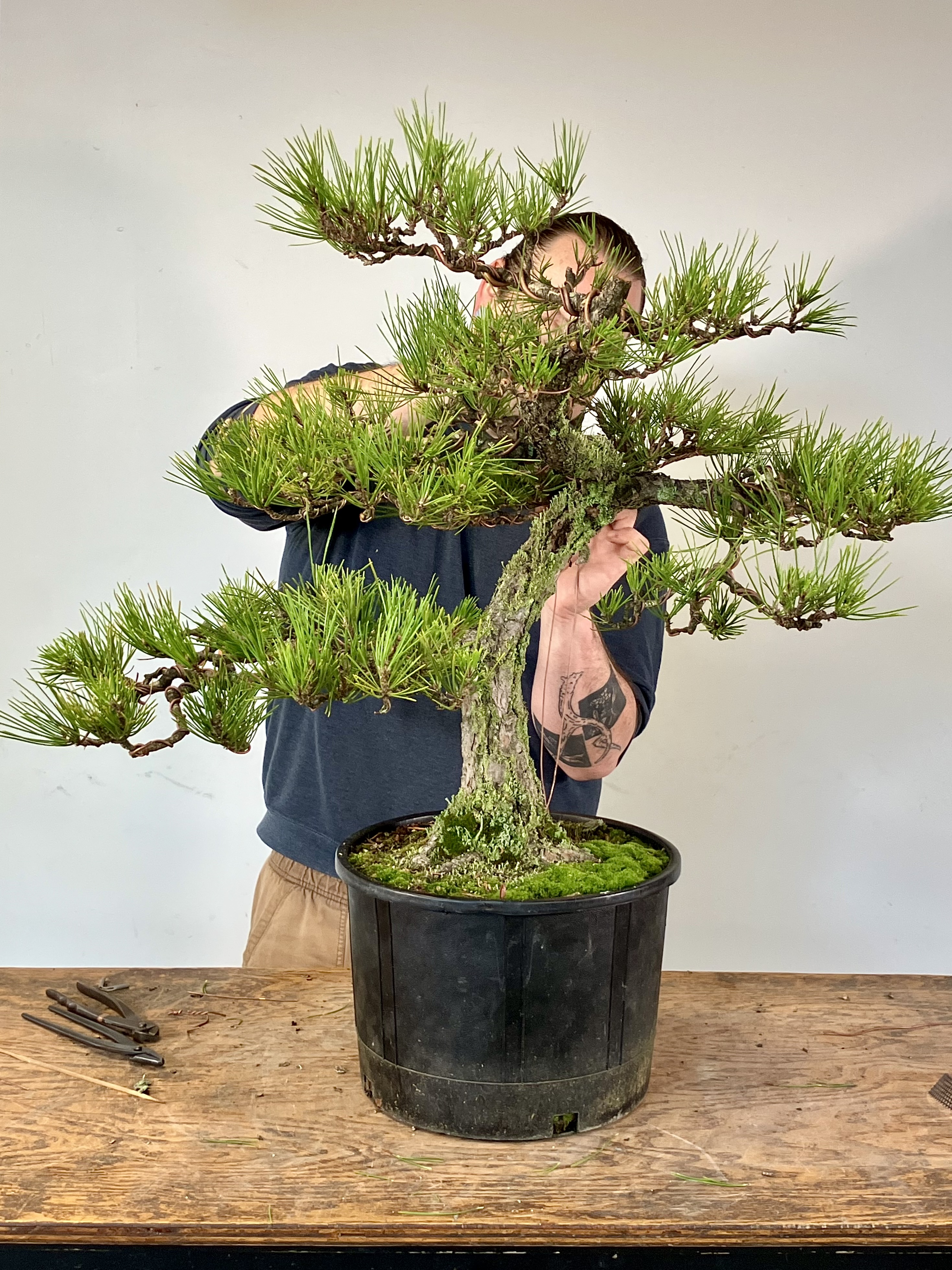
Bottom branches roughly set. Patch is tying a guy wire down to a big root. If possible, it’s best to tie guy wires to the tree itself rather than the pot so you can repot without cutting them off. Guy wires usually take several years to set.
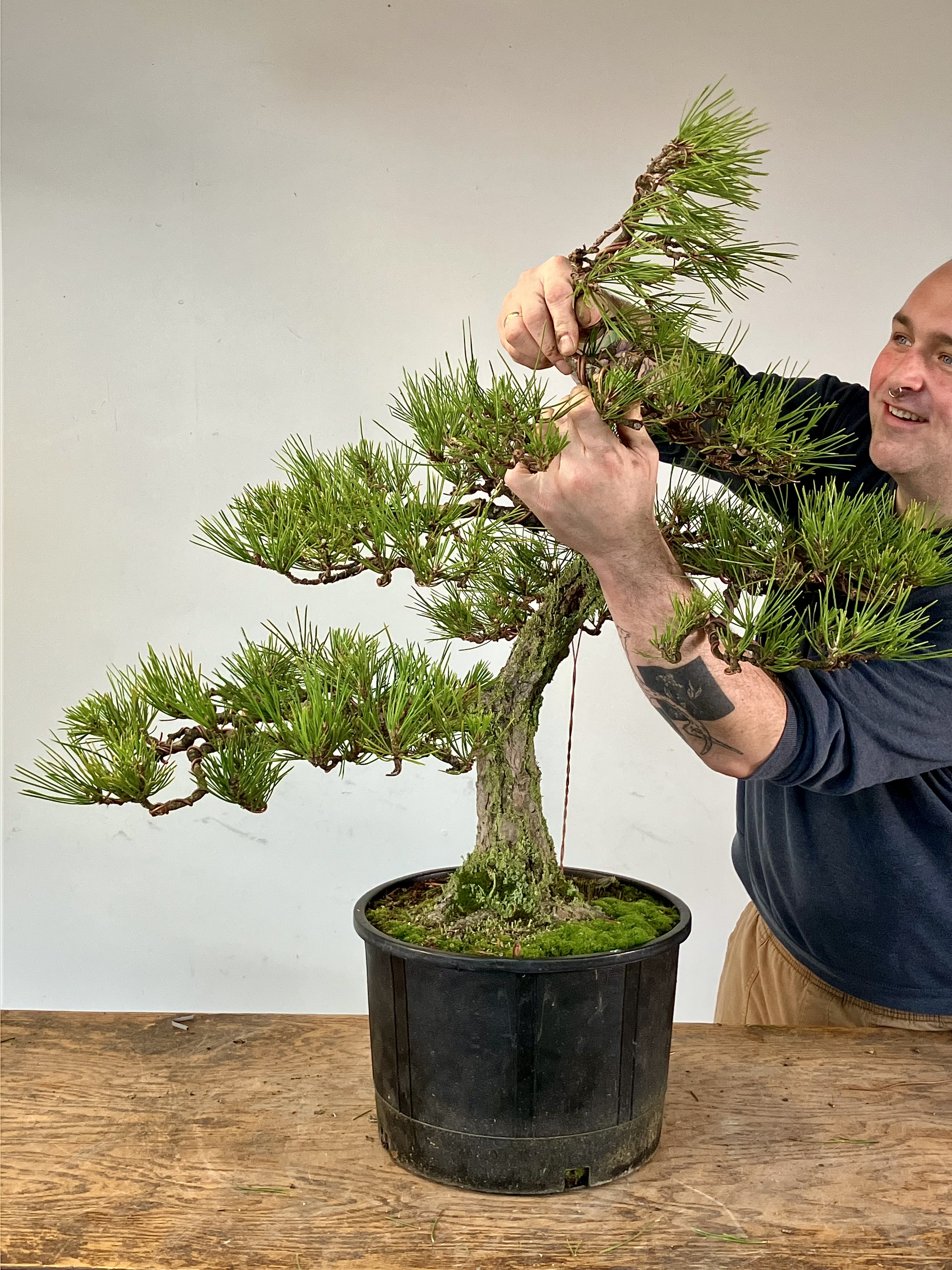
Bending the leader to the right to begin the compaction.
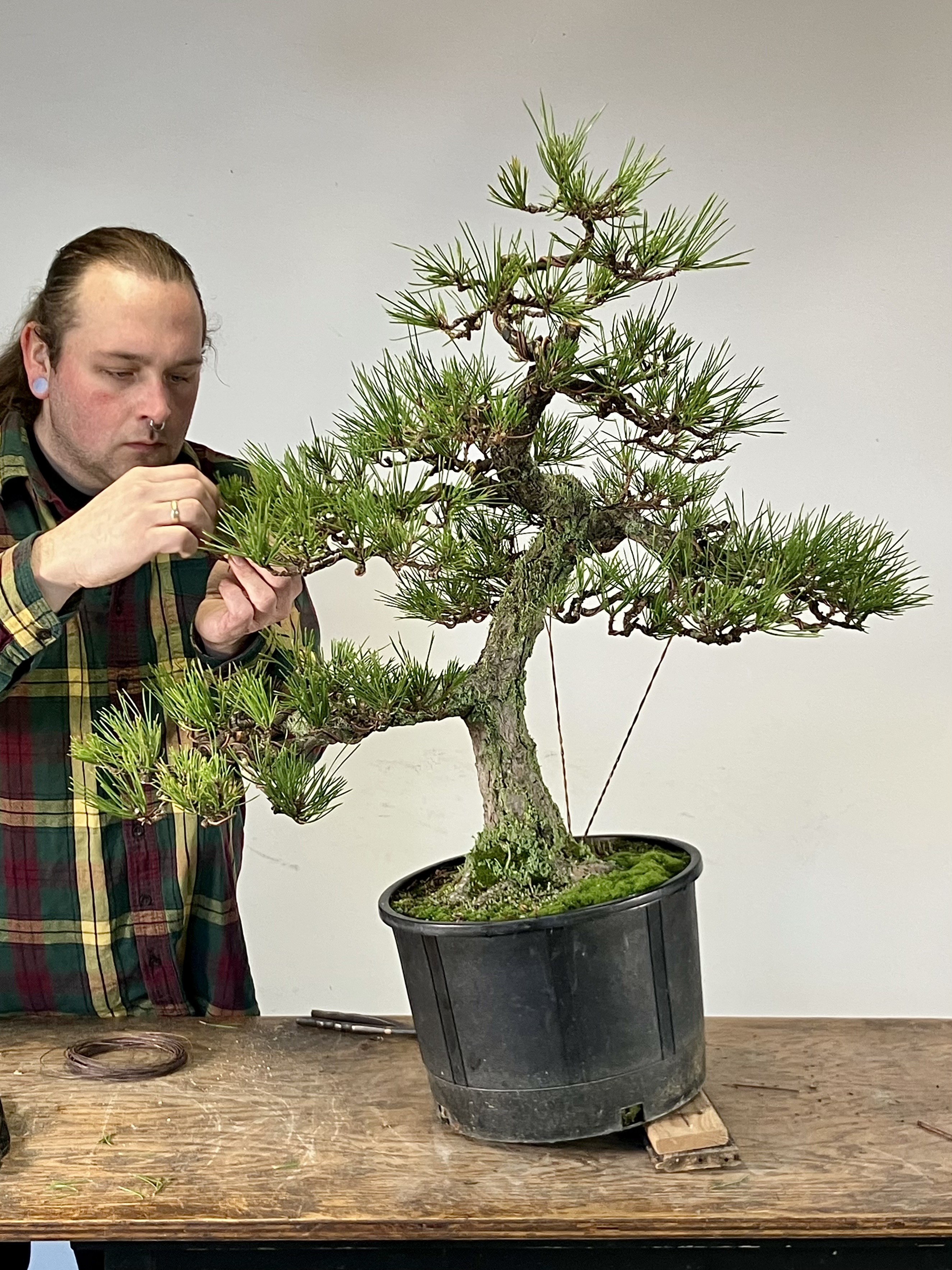
The crown has been scrunched in, and a guy wire lowers the right branch.
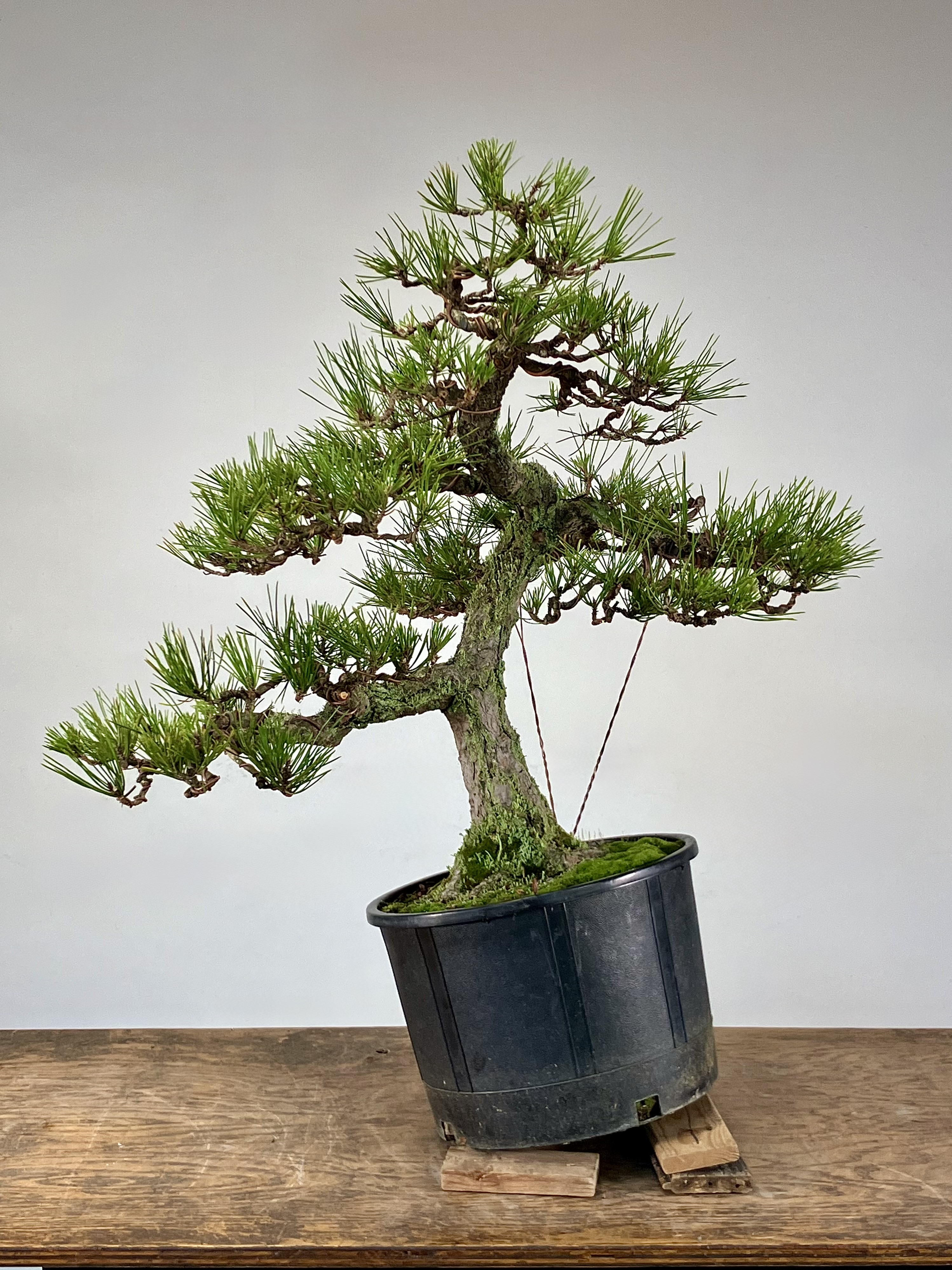
The crown was too tall so we compacted it more. The right branch is now about 25 degrees lower. Before, both the left key branch and the low right branch were horizontal. With the tip to the left and a guy wire on the right branch, both branches now angle down. And with a left lean the trunk is no longer a straight post in the ground.
And yet it’s not quite there.
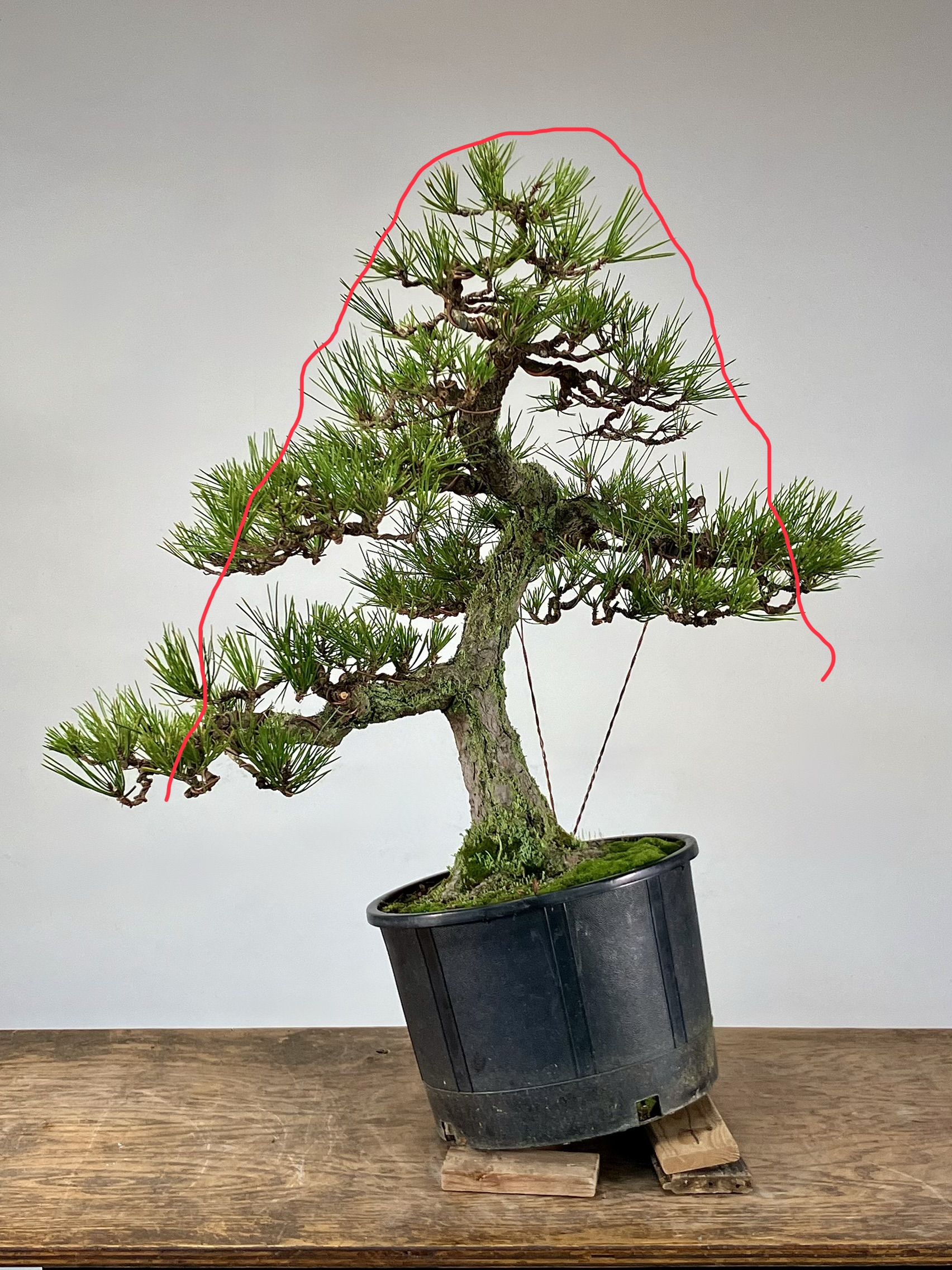
The red line imagines an ideal canopy size. We get that rough line by looking at the trunk girth. With branches that far out, we’d expect the trunk to be 2-3x thicker, and it’s easier to cut branches back than to fatten the trunk.
The crown is within the assumed canopy profile, but the bottom three branches are several inches beyond it. For now the crane is alive and well, still flying.
In about three years we should be able to work those branches back, with growth and more density. And then it needs a repot.