
Mid-Michigan Bonsai Message Corner
The next MMBC Meeting is May 21st, 2026 at the Foster Community Center, Room 109, at 6:30pm (gathering time) - 8:30pm.

Autumn 2024 Open House & Sale
- Category: Rss Feeds
-
Tagged under:
- Created: 14 August 2024
This semi-annual popular event will be held at the International Bonsai Arboretum on September 7-8, 2024.

Upstate New York Suiseki Study Group Exhibition
- Category: Rss Feeds
-
Tagged under:
- Created: 14 August 2024
The Bonsai Society of Upstate New York has a couple of study groups. On September 7-8, 2024, a special suiseki exhibition will be held at the Autumn 2024 Open House & Sale at the International Bonsai Arboretum. Over 50 suiseki from members will be displayed. Members will there to answer any questions.

Which Species Fatten Trunks in a Bonsai Pot?
- Category: Rss Feeds
-
Tagged under:
- Created: 13 August 2024
Growing plants for bonsai tends to assume time in a large training container, or the ground. The goal is to grow a big trunk.

What Bonsai are Worked on in August?
- Category: Rss Feeds
-
Tagged under:
- Created: 06 August 2024
In the Northern Hemisphere, July is the last summer month to trim back deciduous trees. If deciduous like this Chinese Quince are cut too late, past the first week of August, we can set up two problems: not enough time to finish growing before frosts set in, and not enough time for some species to set flower buds for next year. Wisteria and Satsuki azalea are examples of the second issue.

Warren Hill Trees, Then and Now
- Category: Rss Feeds
-
Tagged under:
- Created: 30 July 2024
A recent post shared the loss of one of our great teachers, Warren Hill. When we talk of legacy in this community, the bonsai themselves are a part of that.
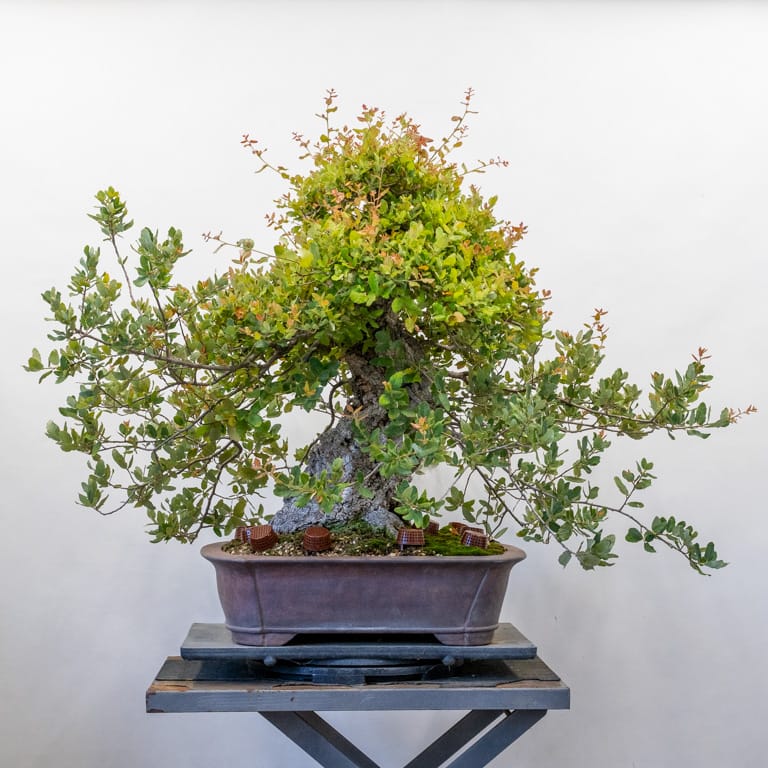
Summer cutback on a large cork oak
- Category: Rss Feeds
-
Tagged under:
- Created: 28 July 2024
After a number of years working with cork oak bonsai, it’s become really clear that for the lower branches to thicken, the top needs regular trimming. This photo from earlier this week makes it clear where the tree wants to produce new growth.

New Jersey Bonsai Societies Exhibition A Great Success!
- Category: Rss Feeds
-
Tagged under:
- Created: 26 July 2024
Last weekend four bonsai societies worked together to present their 2nd Annual Open Event “The Art of Bonsai” exhibition and sale at the Brookdale Community College in Lincroft, New Jersey. Members from the Bergen, Deep Cut, Great Swamp and Pennsylvania Bonsai Societies sponsored the exhibition which was a huge success!

Does It Matter If Our Benches Are Level?
- Category: Rss Feeds
-
Tagged under:
- Created: 26 July 2024
Aside from looking at things with our heads tilted, yes, it matters in another way, too.

Shade Cloth Part IV: Foliage Health
- Category: Rss Feeds
-
Tagged under:
- Created: 16 July 2024
Here is a set of images for a clearer idea of the benefits of shade cloth.

50th Gafu Ten Shohin Bonsai Tour
- Category: Rss Feeds
-
Tagged under:
- Created: 15 July 2024
Join Kora Dalager and me for the 50th Anniversary Gafu Ten Shohin Bonsai Exhibition held in Kyoto, Japan, in early January. This is the premier exhibition of shohin bonsai in Japan. Some of the best shohin bonsai masterpieces will be displayed for your appreciation and study.