
The Kokufu show is a goldmine. You can walk through it or flip through a show book and realize you’re just looking at the stands. Or the branch setting. Or the pots.
In this year’s Kokufu I took some closeups of the nebari. Here’s a handful of them.
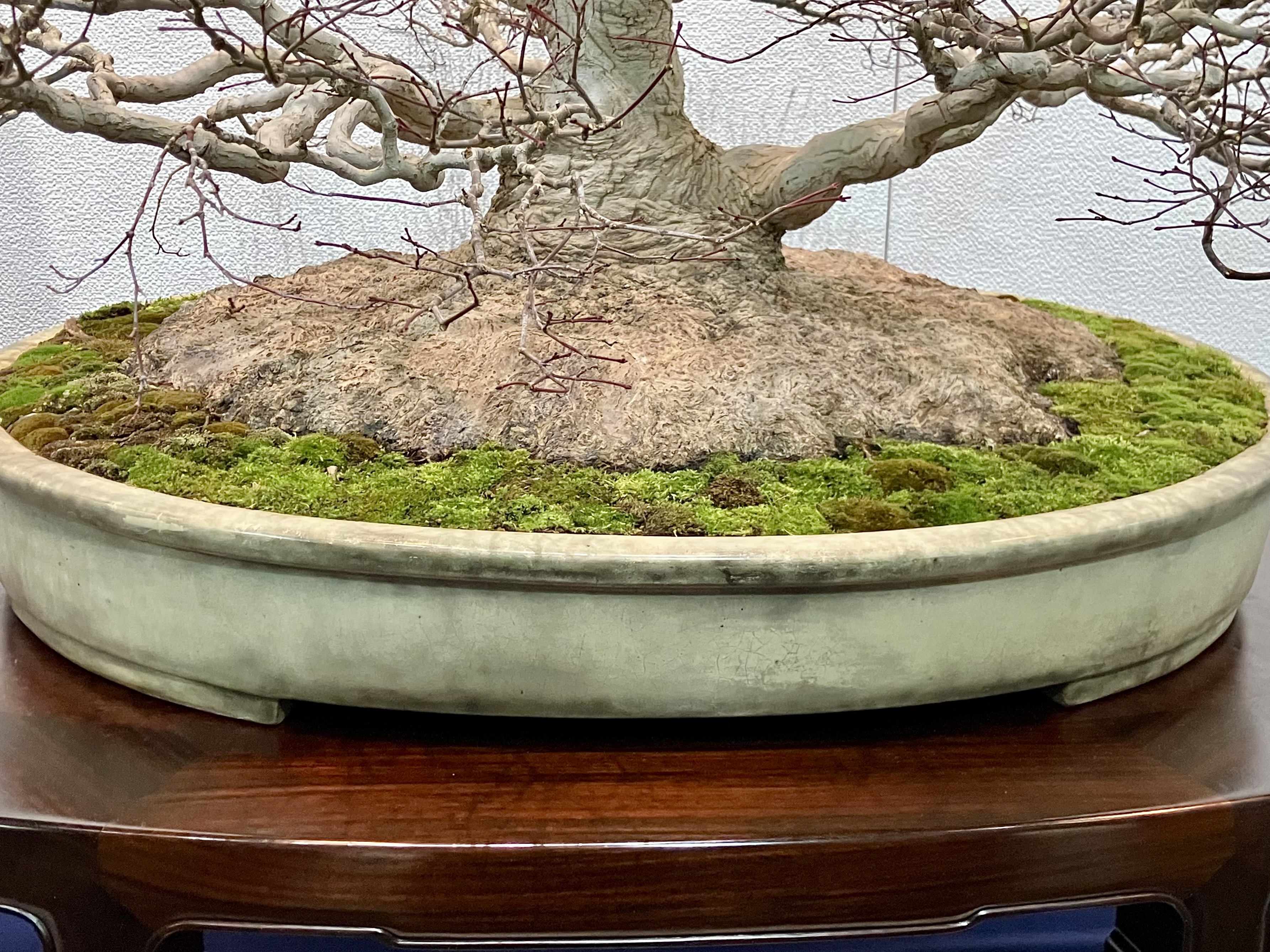
Japanese Maple with a wide, fused nebari. Hard to create without root grafting. Grafting is usually done by inserting a rooted cutting into a hole in the nebari, which will fuse and grow roots. Do that a LOT of times and you might make something like this. The extent of this root flare is a construct, a stylistic exaggeration that exists in almost any art.
Not to knock root grafting, a useful skill for sure.
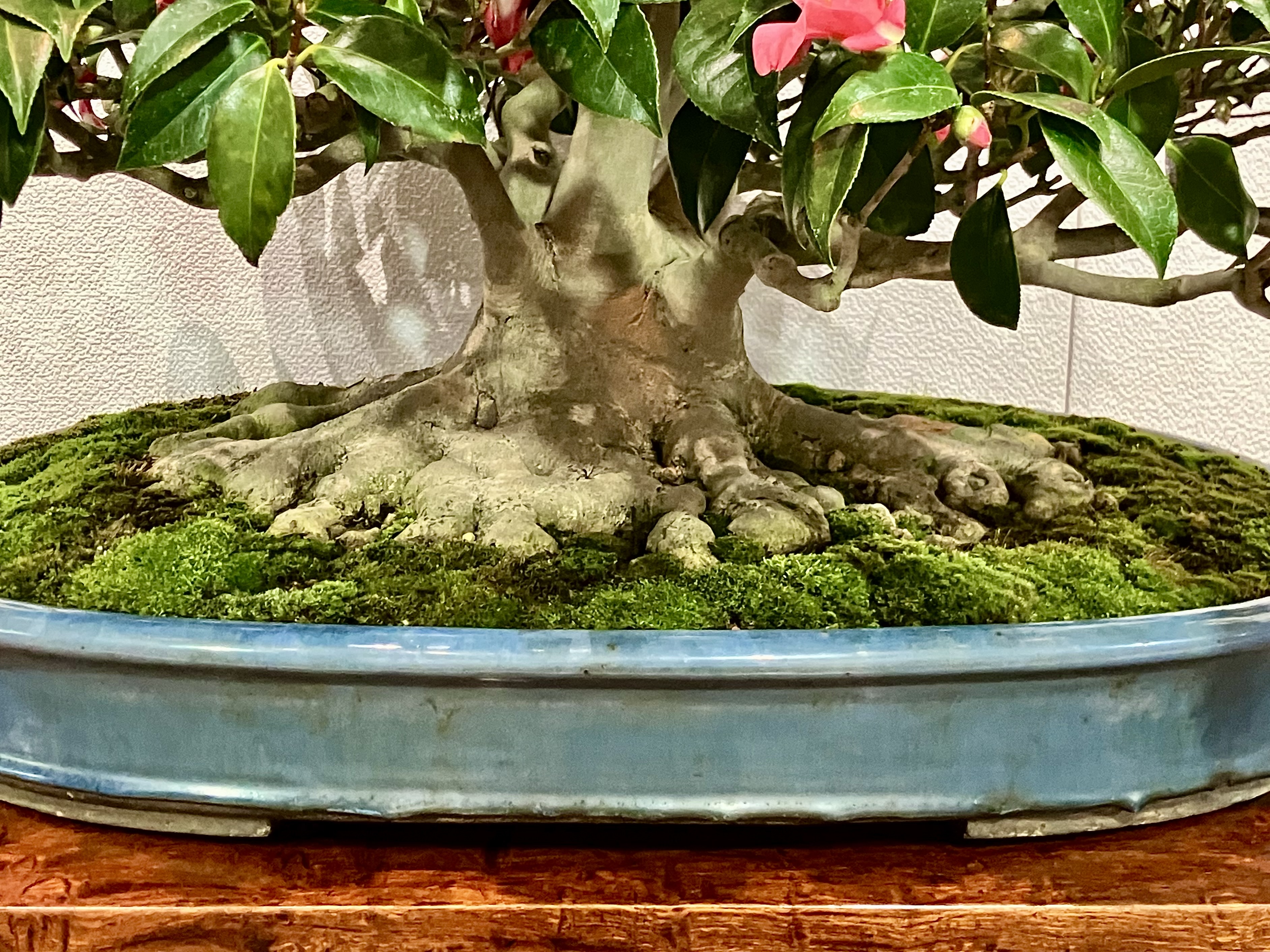
Camellia with a solid, broad nebari. It’s a lot, but not overdone. The tree feels stable.
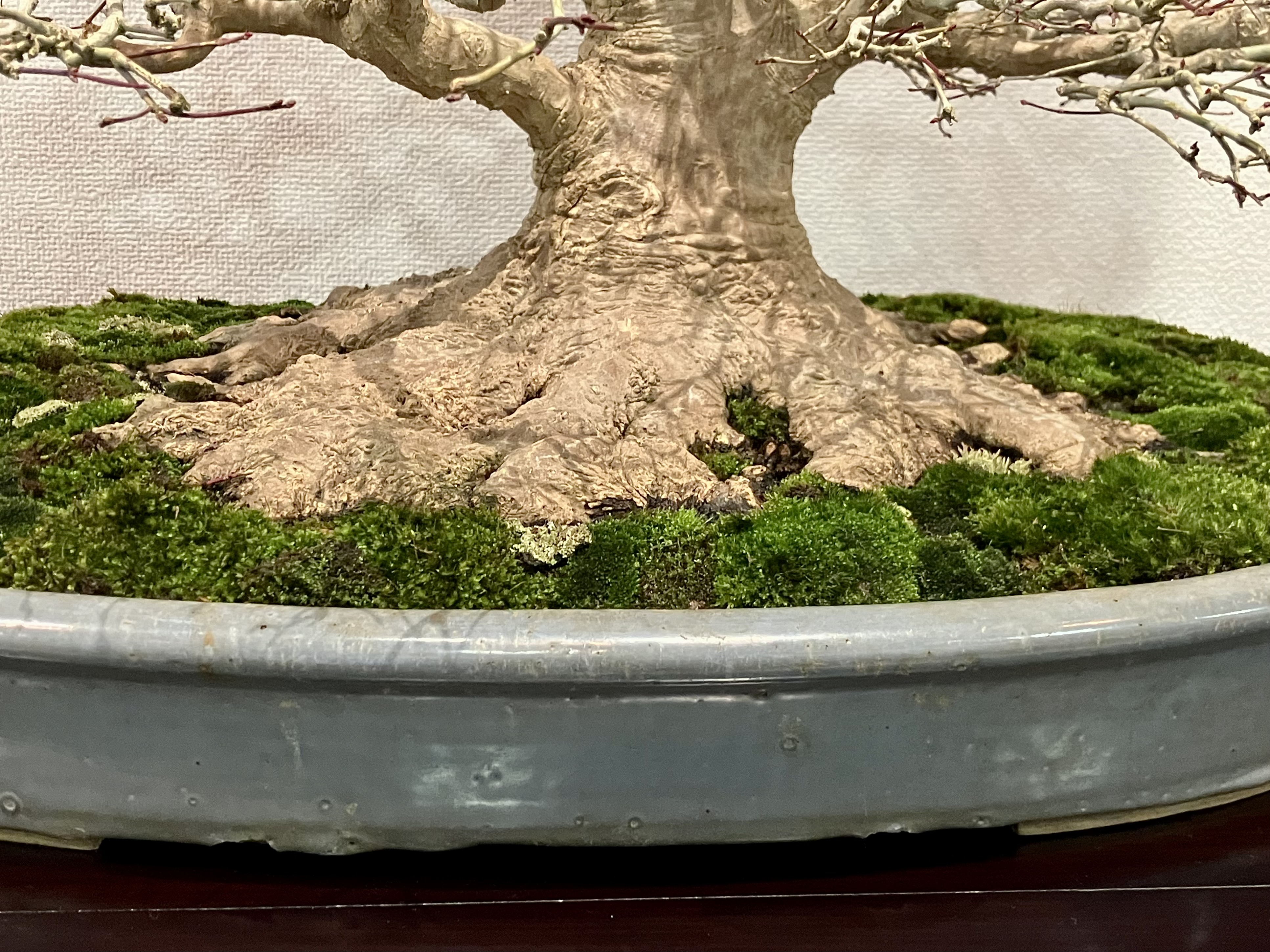
Another Japanese Maple. To my sensibility, this is near ideal. It has a few holes in it, with minimal or no grafting. It looks natural.
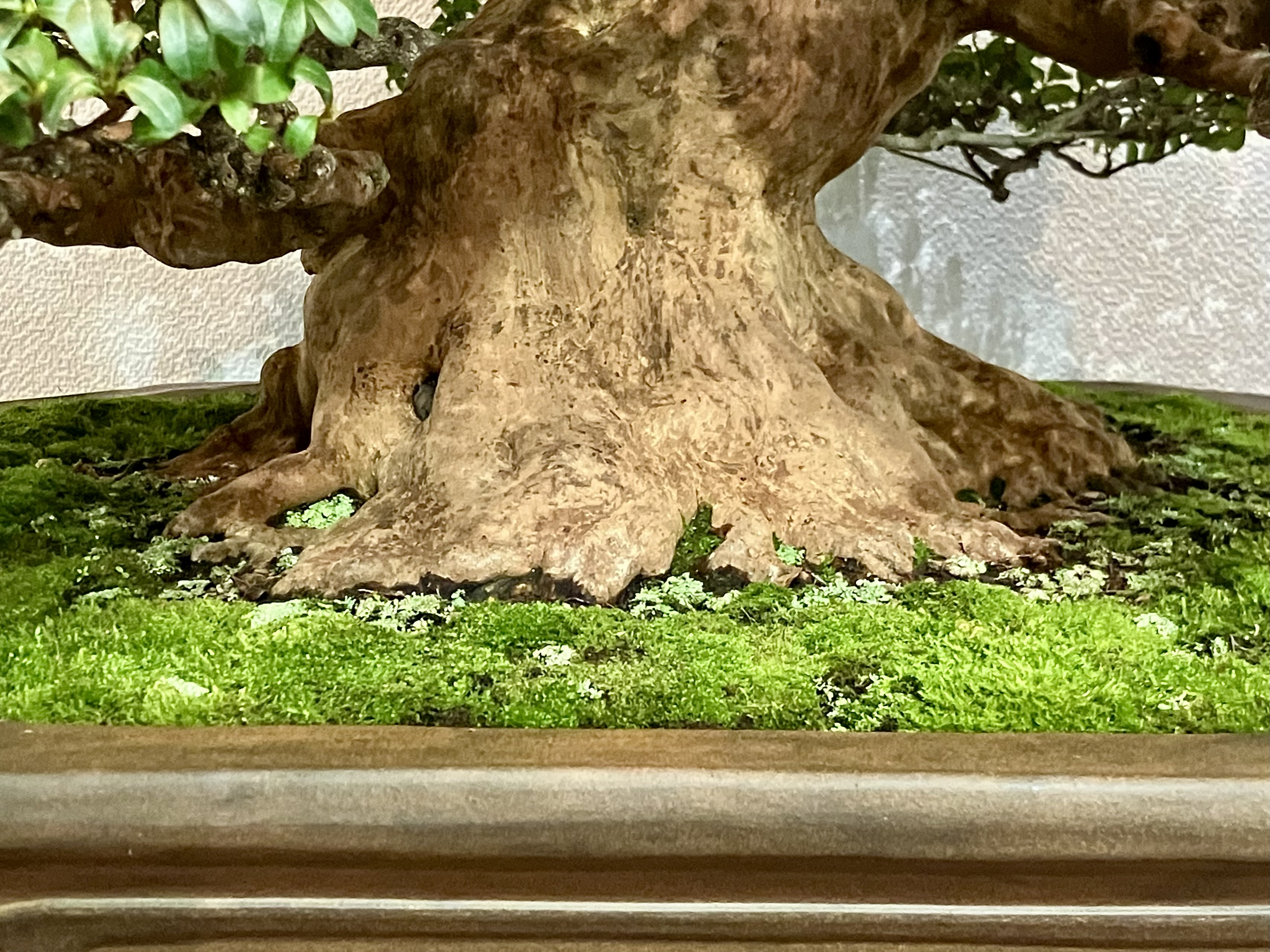
An Azalea with a nice root flare. Like Maples, Azaleas will often create a respectable nebari without much fiddling. Just growing in a pot (rather than the ground) and either trimming the bottom roots hard under the trunk base and / or planting in a shallow pot can make a nebari like this. Although Azaleas prefer deeper pots, so the root trim technique would get the nod here.
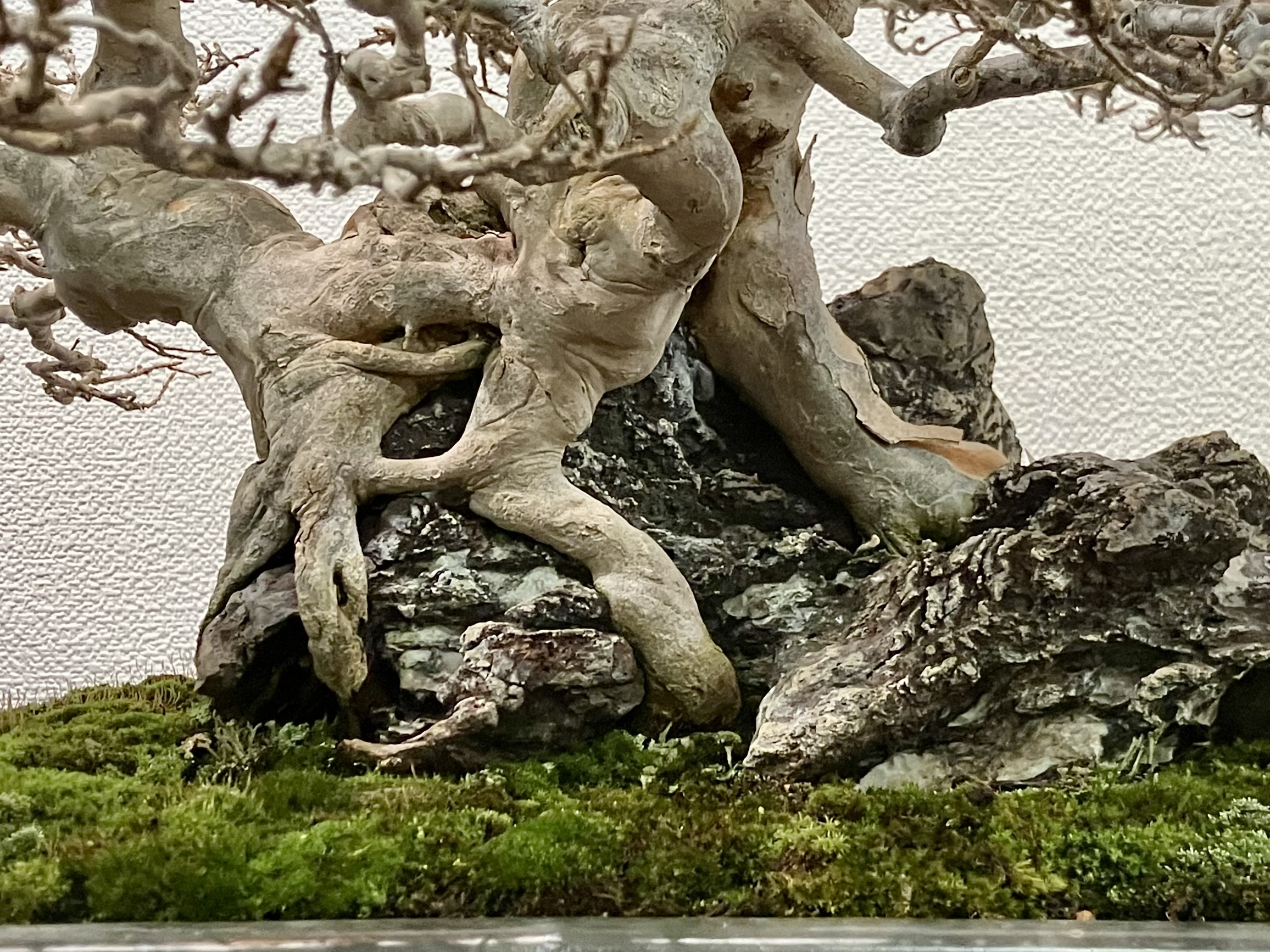
You do see non-impressive—or absent—nebari in the Kokufu. This is a Trident Maple.
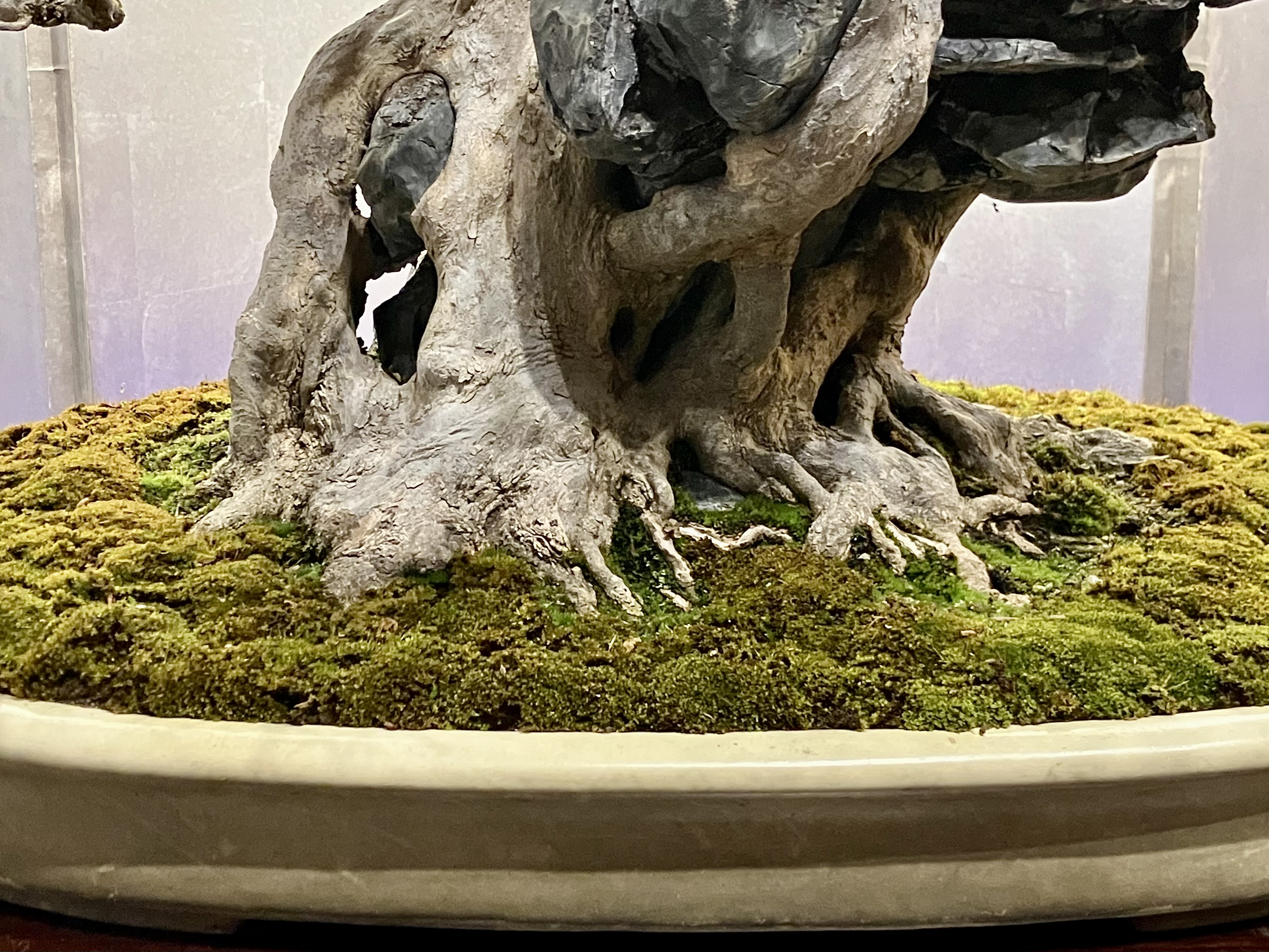
Another root-over-rock Trident but with a more mature root structure.
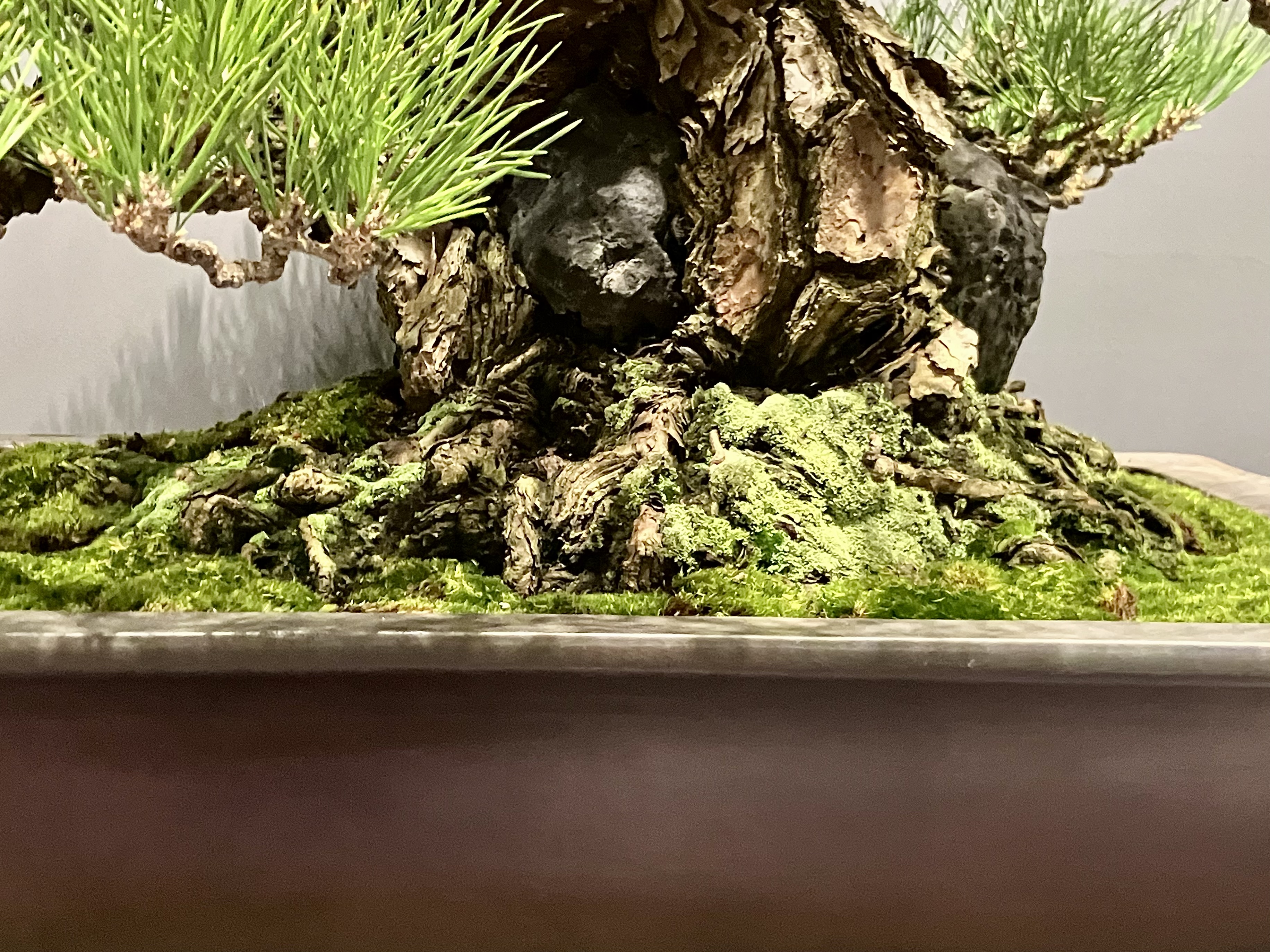
A Pine with a respectable nebari. Also a root over rock. Nebari tends to be minimal on root over rock plantings.
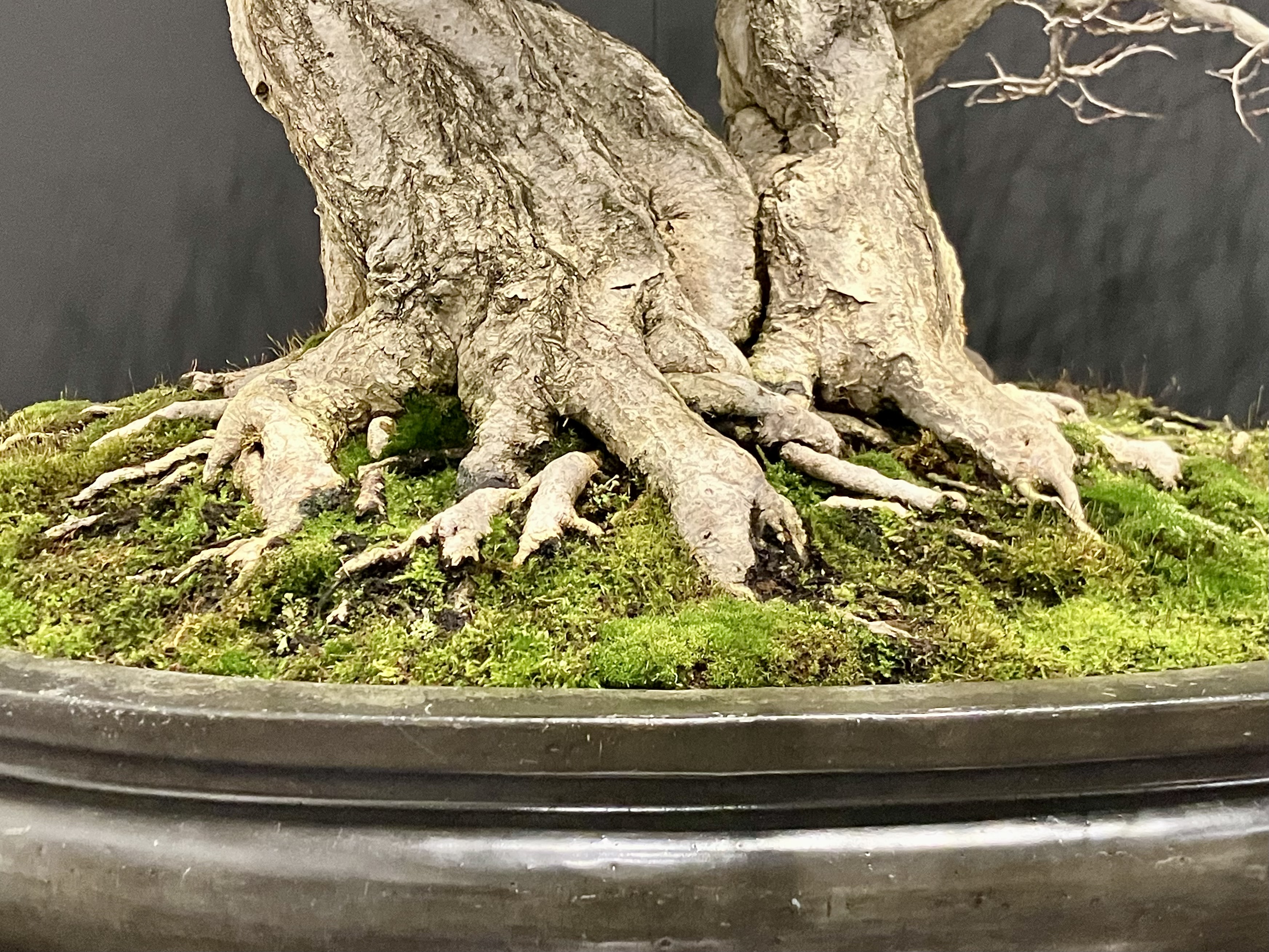
A Hornbeam with an average nebari. Or, rather, a good one for a Hornbeam. Elm is another plant often reluctant to fuse roots into a broader nebari. I think rather than forcing it’s nice to accept this reality. Root grafts would not disappear as well on a Hornbeam as on a Maple, the wound would last a long time. So you don’t see many attempts at it.
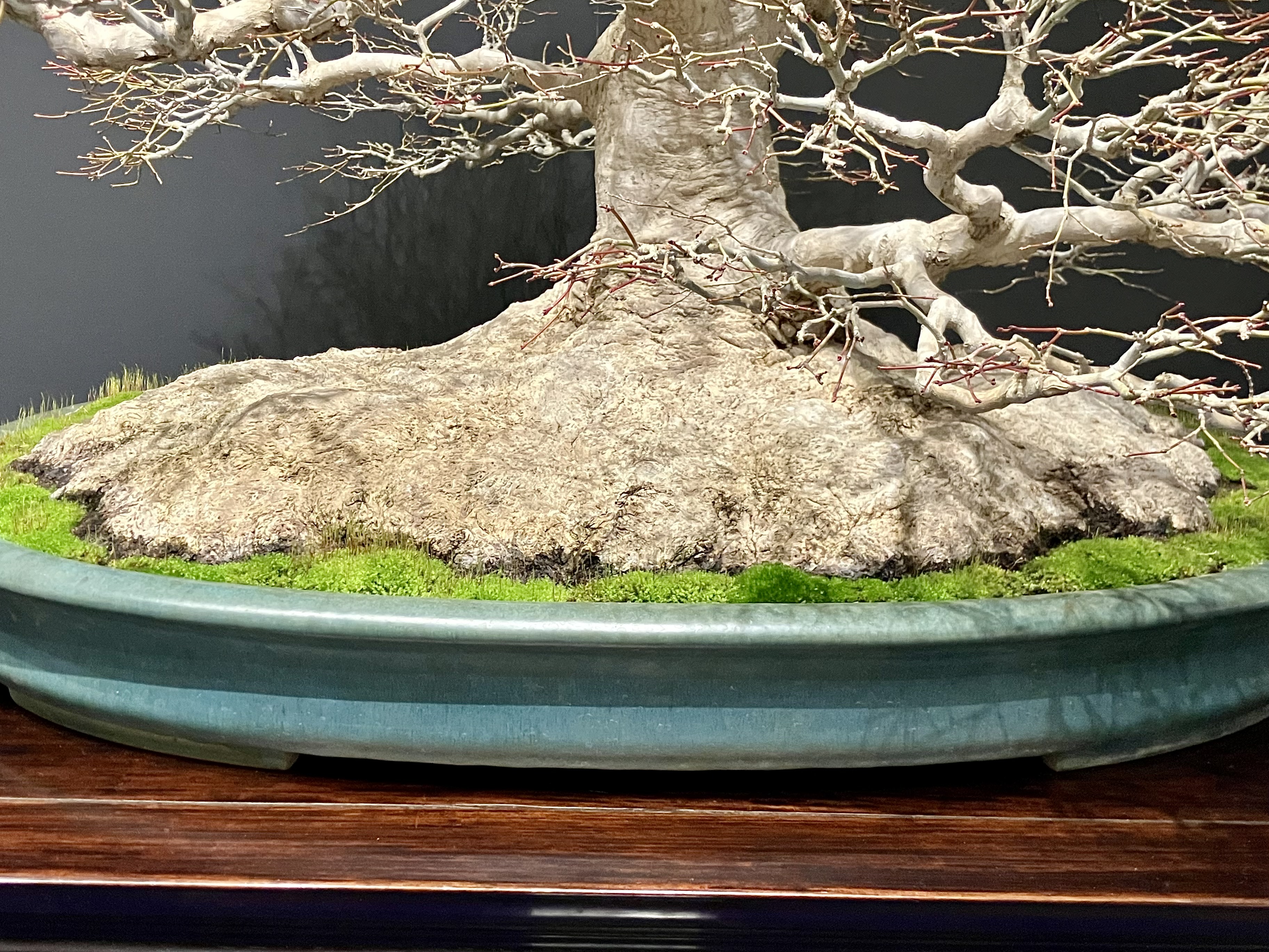
Another Japanese Maple with a grafted nebari. It looks like the foot of a snail to me. About ready to slither off to the next stand. Would be wonderful to have in the backyard. But the mollusk vibe might be hard to shake.
Hope the creator isn’t reading this.
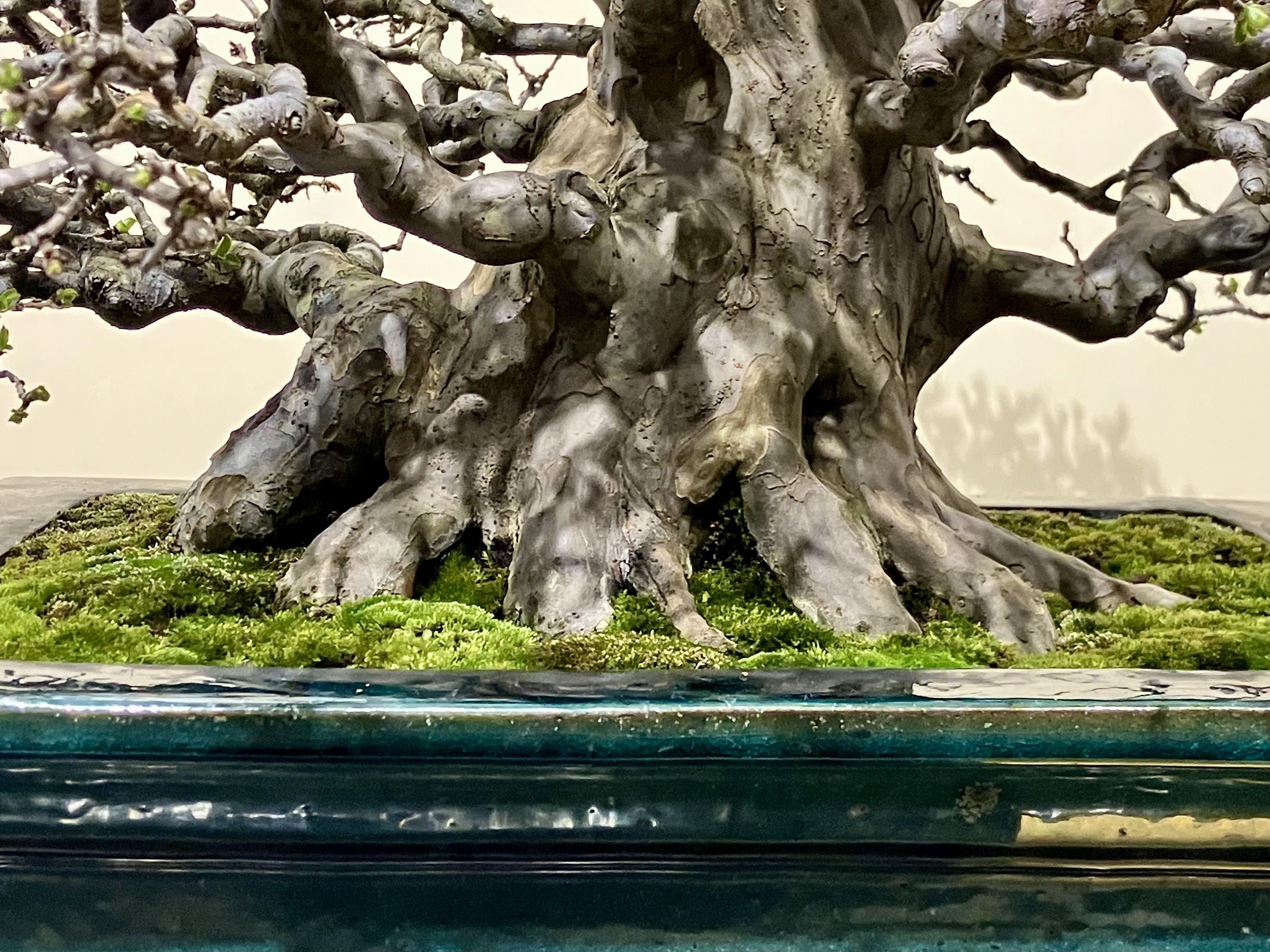
A Chinese Quince. Possibly grown in the ground or a growing bed for a time. Root fingers like this are often the result of that sort of strong growth. Chinese Quince, Hornbeam, and Azalea are examples of plants which have much better nebari if grown in a pot. There’s more fine definition in the nebari structure, more in scale with the tree. Not unlike fine twigging versus coarse.