Print this page
 Summer Defoliation on Bonsai explained
Summer Defoliation on Bonsai explained
-
font size
decrease font size
 increase font size
- Media
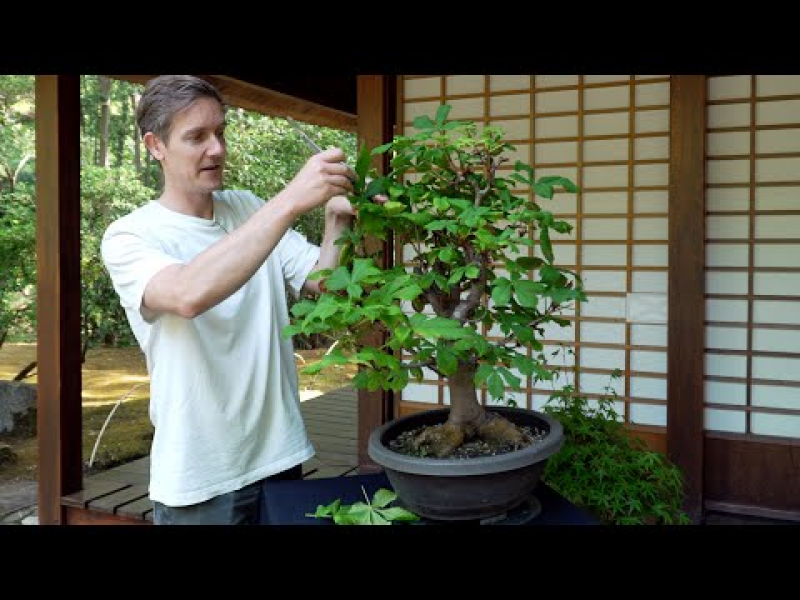 Summer Defoliation on Bonsai explained
As summer rolls in and we approach the longest day of the year, it's the perfect time to talk about a powerful technique in bonsai care—summer defoliation. This is a technique where we remove leaves from certain types of bonsai to help promote better growth, improve branching, and refresh the tree’s energy. This video was recorded in summer 2025.
Chapters:
0:00 - Defoliation explained
1:55 - Case study: Horse chestnut
7:24 - Case study: Japanese maple
For tree-species specific information, go to: www.bonsaiempire.com/tree-species
Species that respond well to defoliation:
Japanese maple (Acer palmatum) — one of the most popular for defoliation; produces significantly smaller leaves on the second flush
Trident maple (Acer buergerianum) — very vigorous, handles defoliation well
Chinese elm (Ulmus parvifolia) — reliable and forgiving; a good species for beginners to practice on
Beech (Fagus spp.) — can be defoliated but is less vigorous, so only do it on very healthy trees
Hornbeam (Carpinus spp.) — responds well; good leaf-size reduction
Zelkova — handles it well, similar to elm
Ficus (many species) — tropical/subtropical; can be defoliated but needs warmth and strong light to recover
Bougainvillea — tolerates defoliation in the growing season
Pomegranate (Punica granatum) — can be defoliated when vigorous
Species to approach with caution:
Oak (Quercus spp.) — possible but risky; only on very strong, established trees
Wisteria — defoliation is sometimes done but not standard practice
Species you should NOT defoliate:
Conifers (pines, junipers, spruce, etc.) — they do not regenerate lost foliage the same way and defoliation can kill them
Weakened or recently repotted trees — regardless of species, never defoliate a tree that isn't in peak health
In this video, we’ll be walking you through the defoliation process on two very different bonsai species: a Japanese maple (Acer palmatum) and a Horse chestnut (Aesculus hippocastanum). While defoliation may sound drastic, it’s an effective way to encourage finer ramification, better air circulation, and a more compact growth habit for your trees.
But, why do we do this in the middle of summer? The longest day of the year marks the peak of the growing season, and it's the point at which the trees have the most energy for recovery. By removing the leaves, we can encourage new growth that’s smaller and more refined, which is especially important for trees like Japanese maples, where fine details are key to their beauty. Some species can be defoliated twice - some not at all. The time we defoliate is species specific, but usually around late spring to early summer.
We’ll show you step-by-step how to carefully defoliate these trees, when to remove the leaves, and how much is too much. You’ll also see the kinds of benefits defoliation can bring—like new, smaller leaves and a more balanced overall shape.
Serious about growing your own Bonsai trees? Then consider enrolling in one of our online Bonsai Courses, taught by expert teachers. For the curriculums and free lectures, go to:
https://www.bonsaiempire.com/courses
Media
Login to post comments